Manchester City is spending £300 million on Etihad Stadium expansion– and it’s not just about adding seats.
We’re talking about a 400-bedroom hotel, a museum, restaurants, and turning this into a year-round entertainment destination that could revolutionize how football stadiums operate in the modern era.
“But here’s what makes this story fascinating: the Etihad has already undergone one of the most dramatic transformations in football history – from Commonwealth Games athletics stadium to Premier League fortress.
And now, they’re doing it again.
Let’s break down exactly how City is spending that £300 million, why this expansion is different from anything we’ve seen before, and what it means for the future of stadium design.

THE ETIHAD’S EXTRAORDINARY ORIGINS
But before we dive into that £300 million plan, we need to understand something crucial about the Etihad – it’s already undergone one of the most dramatic transformations in football history.
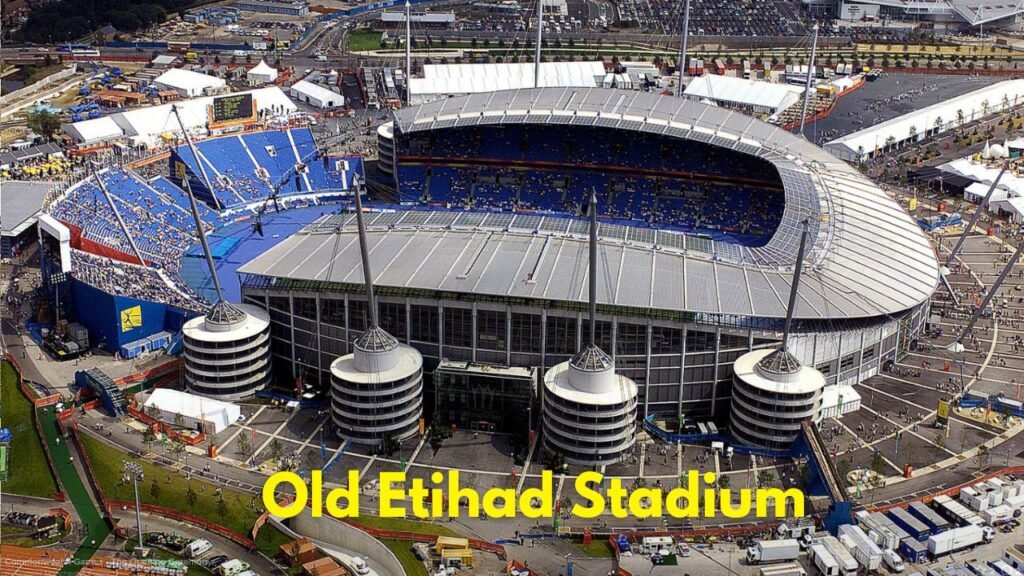
The stadium was originally built for £110 million as the centerpiece of Manchester’s bid to host the 2000 Olympics. When that bid failed, it became the main venue for the 2002 Commonwealth Games, designed as a pure athletics arena with a 38,000 capacity.
Here’s where it gets interesting. After the Commonwealth Games, Manchester City Council faced a problem: what do you do with a £110 million athletics stadium?
The solution was radical – convert it entirely for football use.
“The conversion cost an additional £42 million – £22 million from the council and £20 million from Manchester City.
They removed the running track, reconfigured the lower tier, and increased capacity to 48,000.
By 2003, City had moved from their cramped Maine Road home to this purpose-built modern arena.”
But even this wasn’t the end of the transformation. In 2015, the South Stand was expanded, adding 6,250 seats and bringing total capacity to 54,054.
That expansion cost around £40 million and created what many consider the most intimidating home end in English football.
THE NEW £300 MILLION ETIHAD STADIUM EXPANSION
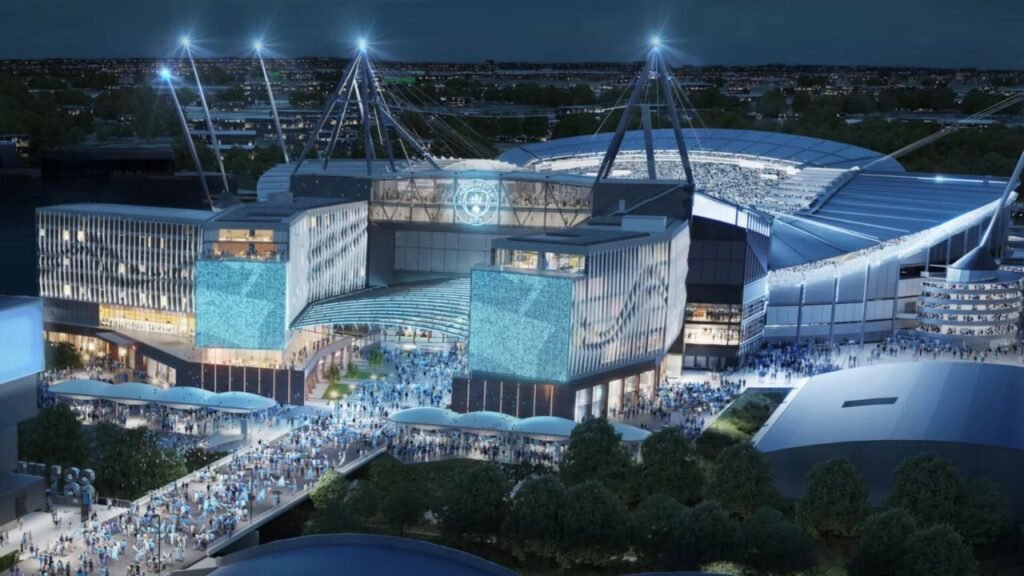
Fast forward to 2023, and Manchester City unveiled their most ambitious project yet: a £300 million expansion that will fundamentally change what a football stadium can be.
The centerpiece is the North Stand expansion. This adds 7,900 seats. Total capacity hits 61,958.
But here’s what makes this different – they’re not just building upward. They’re building a complete entertainment ecosystem.
We’re talking about a nine-story hotel. 401 bedrooms. An eight-story building with restaurants, bars, a new club museum, and premium retail. Conference facilities operating 365 days a year.
This isn’t stadium expansion – it’s urban development.
There’s also a stadium roof walk experience – similar to what you see at major stadiums like the Bernabéu. Fans can literally walk on the stadium roof for panoramic views of Manchester.
The ground level transformation is equally impressive. A covered City Square fan zone with capacity for 3,000 people – that’s bigger than some entire stadiums. This isn’t just a meeting point, it’s a destination.”
The engineering challenge is immense. Unlike traditional expansions that add seats to existing structures, City is building around the Etihad’s unique cable-stayed roof design. The stadium’s distinctive feature is its 70-meter high masts connected by cables that suspend the roof – a structural system that complicates any expansion work.
The architects, Populous, had to design the North Stand expansion to integrate seamlessly with this existing cable structure. The new stand features steel pylons that connect to circular spectator walkways – these aren’t just functional, they’re part of the roof walk experience.
But here’s the clever part. Every new facility operates independently of match days. The hotel hosts business conferences. The restaurants serve the local community. The museum attracts tourists year-round. Traditional stadium thinking is dead.
Which brings us to the construction challenge.
CONSTRUCTION CHALLENGES AND TIMELINE
The construction timeline tells a story of ambition meeting reality. Planning permission was granted in July 2023, with construction beginning almost immediately. But this isn’t your typical building project.
Every construction phase has to be timed around City’s fixtures. Phase one focuses on the hotel and commercial buildings. Phase two involves the actual stand expansion. That’s where it gets complex.
The project is being built in phases to minimize disruption. Phase one focuses on the hotel and commercial buildings behind the North Stand. Phase two involves the actual stand expansion – and this is where it gets really complex.
Unlike Liverpool’s approach at Anfield, where they could build behind existing structures, City’s expansion requires demolishing and rebuilding sections of the current North Stand while maintaining capacity for ongoing matches.”
Current progress reports show the hotel core is now in place, with the distinctive steel framework becoming a new feature of Manchester’s skyline. But the most challenging phase – integrating the new upper tier with the existing stadium structure – is still to come.
The timeline is aggressive. Completion by mid-2026. City will build a major hotel and expand their stadium in under three years. That’s incredible.
But here’s what really matters – the money.
THE BUSINESS CASE: MORE THAN JUST FOOTBALL
Let’s talk money – because this £300 million investment represents a fundamental shift in how football clubs think about stadium revenue.
Traditional stadium expansions are simple. More seats equal more ticket sales. But City’s approach is different. They’re creating revenue streams that work 365 days a year.
The hotel alone represents a game-changer. With 391 rooms in prime Manchester location, integrated with conference facilities and premium dining, City could generate £30-40 million annually just from hospitality operations.
Match-day revenue gets a boost too. The additional 7,900 seats could generate £15-20 million per season in ticket sales alone. But the real money is in premium experiences – hospitality packages, corporate facilities, and exclusive access experiences that can command premium pricing.
There’s also the naming rights factor. The expanded complex offers new opportunities for commercial partnerships. Imagine hotel rooms sponsored by major brands, restaurants with exclusive partnerships, or conference facilities with corporate naming deals.
City’s current annual revenue hits £650 million. This expansion could add £50-60 million annually. That makes the £300 million investment look strategic, not extravagant.
Now, how does this compare to the competition?
COMPARING THE COMPETITION
How does this compare to other major stadium projects? The scale is unprecedented in English football.
Tottenham’s new stadium cost £1.2 billion. But that was a complete rebuild. Arsenal’s Emirates cost £390 million in 2006. Limited additional revenue beyond match days. City’s model is more sophisticated.
Even internationally, few projects match this scope. Real Madrid’s Bernabéu renovation costs €1.2 Billion but is spread over a longer timeline. City’s concentrated investment in mixed-use development is more comparable to American sports complexes.
The key difference is integration. Other clubs add hotels near their stadiums. City is building their hotel into the stadium structure. This creates unique experiences impossible to replicate.
Of course, nothing this ambitious goes exactly to plan.
CHALLENGES AND POTENTIAL SETBACKS
Of course, projects this ambitious rarely go exactly to plan. City faces several significant challenges.
Weather is a constant factor. Manchester’s climate can delay construction for weeks. The complex engineering creates multiple potential failure points. Cost inflation is another concern. The original £300 million budget was set in 2023. Final costs could easily exceed £350 million.
CONCLUSION: THE FUTURE OF FOOTBALL STADIUMS
Manchester City’s Etihad stadium expansion represents more than just additional capacity – it’s a blueprint for the future of football stadium design.
By 2026, the Etihad offers something unique. A fully integrated entertainment destination operating 365 days a year. This isn’t just about football anymore. It’s about creating experiences that bring people regardless of what’s happening on the pitch.
If City’s mixed-use model proves successful, other clubs will follow. We could be looking at a new era. Football stadiums as genuine community and entertainment hubs.
For City, this represents the final piece of their infrastructure puzzle. They’ve invested billions in their training ground, their academy, their playing squad – now they’re creating a stadium experience that matches their on-pitch ambitions.
The Etihad has already undergone one dramatic transformation. From Commonwealth Games venue to Premier League fortress. Now it’s transforming again. Into something that could redefine what we expect from 21st century football stadiums.
What do you think of City’s approach? Is this the future of stadium design? Let me know in the comments below. And if you enjoyed this deep dive, make sure to subscribe our youtube channel too – we’ve got more football infrastructure content coming your way that you won’t want to miss.